Sunday, October 22, 2006

Architecture + Ecology exhibition


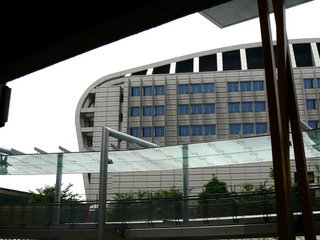
Exhibition at URA
"Made in Germany - Architecture + Ecology"
5 to 28 Oct, URA Centre

Germany aspires to develop sustainable architecture - one that goes beyond pure aesthetics to deal also with the impact of architectural projects on all aspects of daily life. This includes the practice of architecture in sensitive response to ecology and the environment.

The exhibition is the first in the series of exhibitions produced by the Goethe-Institut on contemporary German architecture, showcasing German architecture in response to various cultural and socio-political environments. This premiere exhibition in the series deals with ecology, and illustrates the aspirations and innovative achievements in developing sustainable architecture by an emerging generation of German architects.

Nine projects, ranging from a daycare center, and administration tower, a train station to a zero-emissions factory, will be presented at the exhibition. The projects provide an insight to integrating ecological principles into innovative building designs, some of which could be applied to the Singapore context.The exhibition is part of URA’s continuing effort to promote architecture and urban design excellence in Singapore. It is hoped that the architectural approaches presented in this exhibition could spark the interest of local architects and the public, in search of architectural solutions that are responsive to ecological needs.
The public can view the exhibition at the atrium of The URA Centre, from 5 Oct to 28 October 2006. Opening hours are Mon - Fri, 9:00am to 7:00pm; Sat, 9:00am to 5:00pm; closed on Sundays and public holidays. Admission is free.
(excerpted from URA website)

I had a look at this exhibition while in Delft two years ago. It's not terribly snazzy - don't expect to get blown away by wild forms and extreme technologies. Yet, in a true 'German' sense, the architecture on display is highly clinical, almost unpretentious in its pursuit of ecological sustainability. I'd say it's worth a visit.

Tuesday, October 03, 2006

Kevin Low's lecture webcast

Hi guys, for those amongst us, including myself, who might've missed the very charming Kevin Low guest lecture at NUS, and who might've got bored of Youtube (if that can even happen at all), here's the recorded webcast:

http://www.arch.nus.edu.sg/guest-lectures/vod/2006/mark.html

And a listing of webcast lectures over the past two years is as follows:

http://www.arch.nus.edu.sg/guest-lectures/gl_index.htm

Enjoy!

Saturday, September 30, 2006

upcoming Architecture lectures!

Kerry Hill
"Project Snapshots, 1996 - 2006"
3 Oct, Tuesday
LR423, SDE, NUS. 4 pm

Charles Benton
Professor in Architecture, UC Berkeley
"Sustainable design: building stories"
10 Oct, Tuesday
LR423, SDE, NUS. 4 pm

SIA (Singapore Institute of Architects) Gold Medallist - Tang Guan Bee
"Formless Form"
12 Oct, Thursday
Kenzo Level 2, Gallery Hotel. 7 pm
Registration required (with SIA)

Kelvin Kan
Architectural Designer/Engineer with Arup
"Uncover the Skin of Modern Architecture"
13 oct, Friday
LT13, NUS, 630pm

and... drumroll...

Frank Gehry
"Recent Projects"
16 Oct, Monday
UCC, NUS. 7pm
Registration required (with SIA)

Thursday, September 28, 2006

Man builds his own cathedral


99.99999...% of buildings in the world are not built by architects' hands, said Nazrine Seraji, at her recent guest lecture in NUS.

Perhaps that's because constructing a building from scratch seems like such a mammoth endeavour. Something best left to the pro builders who know how to drive cranes, operate piling machines, recruit armies of workers from remote Bangladesh, to whom dropping millions of dollars on buying material is peanuts. Could we really build anything apart from the occasional wooden structure in a remote village somewhere?

Even as we speak, Don Justo, a devout old Spanish farmer, continues to meticulously toiling on his own cathedral. He has no plans, "only in his own head". His workers are his six nephews. He has no crane, he uses pulleys. He has no engineer, legal permission, funding, or support from the church. Most of his materials are recycled or excess from construction companies. Amazingly, the Romanesque-style cathedral is taking shape.

This is no little country church. It's got an 8000sqm footprint and is 40m high, with a dome like St Peter's in Rome.

Check here for the inspiring story and pix:

Don Justo's Self Built Cathedral

Sunday, September 10, 2006

Crossing Boundary

Just presented a paper in a conference with two of my friends (Ju-lin & Hanying). Interestingly it was not an architectural conference, but one on Tourism. It gathered researchers of various disciplines – mostly anthropologists, sociologist, geographers, and occasional mass comm researchers, to address the issue of rising tourists “Of Asian Origin” and “Rethink Tourism in Contemporary Asia”. Although we’re only one of the two delegates from architecture (the other one was a Prof from University of Philippines, who presented 3 beautiful islands), to my surprise many of the papers do talk about architecture. One local delegate even use the design of new Majestic Hotel as an example of new boutique hotel to illustrate how heroic/nostalgic “colonialism” was brought back to life (in a positive sense) through amalgamation of “post-modernism” and “globalization” (isn’t this what archi theorists talk about?). Sadly, none of these presentations made reference to any designers/architects involved, but merely reviewing the constructs without attempting to understand the mind of the constructors. Nevertheless, what strikes me is the relevance of architecture in other disciplines, especially today when boundaries converge. It's time to break away from our own little circle and start talking to other people. Well, think I'll join more non-architectural events in future.

Among the non-architects

Saturday, September 09, 2006

The world's hottest profession


HOLLYWOOD-- Late-breaking news: the architect is not in the proverbial bottle, as previously believed, but long since popped the cork and is making it big on the silver screen.


An article in the San Francisco Chronicle details how Hollywood can't get enough of architecture. They adore the manliness of the profession, the gorgeous drawings, and the heroic architect-types who are artistic, driven and oh, so passionate...


Excerpted below but modesty forbids me from reproducing the choicest quotes from the article. Read it here.


The perception of architects as cool is evident in "There's Something About Mary," when Matt Dillon pretends to be one in an attempt to impress Cameron Diaz....


"There are very, very few professions that still have a ring of heroism about them, and architecture is one of the few that does...And it's one of the last manly professions -- you are building something outdoors." [says film historian Robert Osborne]


"Passion for your work does carry over to a passion in real life," says John Powers, a practicing architect for 35 years... The notion of them as catnip to women appears often on celluloid.


"Architecture and the act of building have a lot of metaphorical power. Building something good seems admirable in itself, beyond what it pays as work. Architecture also has a bit of the common touch, which is important for a movie hero."

Friday, September 08, 2006

Running from Sci Arc

HaHAHA!
This is the funniest thing. I did not choose to go to Sci Arc because of their approach. Now Sci Arc is coming to me- Michael Speaks is coming to TU Delft! And this whole Design Intelligence thing is coming to TU as well. (courtesy of Sci Arc, OMA etc) Achtung!

Wednesday, September 06, 2006

Monday, August 28, 2006

Review: The purpose of details

Just thought I'd add a couple of thoughts on the "forum" at SP, "the Purpose of Details". Was very heartened by the presence of students and staff from not just Sing Poly where it was held, but NUS as well, with our tutors and practitioners attending as well.

In a way it was sort of reminiscent of the lectures in Berlage Institute, attended by students from TU Delft, some of which came at a cost (but always with beer or wine involved! :P) For now, I'd more than make do with coffee and hokkien mee as refreshments though, but that's another story altogether.

The "Purpose of Detals forum", however, was a misnomer, on two counts:
1. It wasn't a forum, but a series of guest lectures. (This isn't necessarily a bad thing.)
2. Only one out of the three speakers really went into the poetics and logistics behind the details of his works, all of which are, in the words of Colin Seah, hair-raising. That's really saying something, for someone who's bald. (Sorry, Colin, had to take a jab at that! ;))

Yet, a highly enlightening series of lectures, each speaker himself meriting an entire guest lecture session of his own.

Kevin Low's work is simply amazing. Probably one of the best lectures I've been to, on account of learning, being entertained and completely understanding what he was talking about, helped greatly by his flawless English and exquisite drawings and photographs.

Good news: Kevin will be conducting the Year 3 Tropical Workshop at NUS. (Those lucky children! ;)) What's great about this is that Tropical Workshop conductors typically give public guest lectures. I'll definitely push for this to happen, in my capacity under TAS, as everyone deserves to see and hear what he has to show. It's that good.

Will post updates on this space regarding where and when the lecture will be. Most likely it'll be at one of the LRs at the Archi Dept, which is small, but arrangements can be made for it to be cast live in another Lecture Room.

On another note, Nazrine Seraki from Atelier Seraji will be giving a lecture on 30 August 2006 at LR 425, NUS Architecture, at 3 pm. More details can be seen here:

http://hannisms.blogspot.com/2006/08/architecture-happenings.html#links

Hihgly recommended.

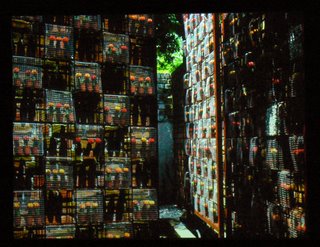
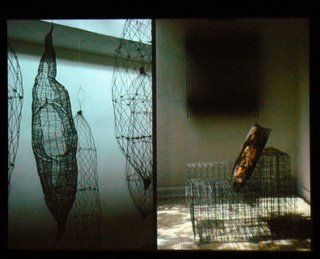
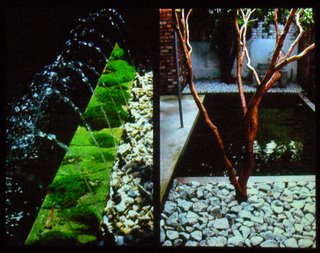
I'll leave you with some images of the Purpose of Details forum.


Friday, August 04, 2006

A look at the revamped Singapore History Museum

Some pix of the revamp of the dusty National Museum, done by W Architects I think. It's pretty sensitively done and you barely notice the new extension from the front.

shm6.jpg
The museum by night

shm4.jpg
Sunken corridor between the two blocks

shm3.jpg
The facade of the old block, facing the new.

shm2.jpg
The brick wall in the screening room, meant to be reminiscent of the red-brick old National Library

shm1.jpg
Detail of the bricks-- apparently the holes are for acoustic material