


 Life as an architect/ architecture student can get pretty daunting sometimes. Here's something that I hope would bring a smile to your face amidst all those unimaginable datelines.
Showing posts with label Miscellaneous. Show all posts
Showing posts with label Miscellaneous. Show all posts
Wednesday, March 26, 2008
The Modern Day Architect

Wednesday, March 19, 2008
Lucid Dreaming Redux... Parallel Universes, Parallel Projects?
While I was reading up on Philip K Dick (on Wikipedia, I must admit), and on recollecting some of the themes of films that have been adapted from his work, it occurred to me that a recurring theme in his work are that of parallel universes and simulacra. These tend to become plot vehicles and/or set pieces for the antihero characters in his novels... say, the possibility of viewing "parallel scenario of the future" which allows prospective criminals to be apprehended before the crime is actually committed, in "Minority Report"; or multiple identities, and therefore multiple trajectories of life, courtesy of a mind-altering drug, in "A Scanner Darkly".
(On the same page, for a truly trippy experience, rent "Altered States" which starred a younger and more follicled Ed Harris.)
I couldn't help but notice that Sern Hong's "Pirated City" thesis project bore themes that reverberated with the above. The constant link-up of his projects between Los Angeles and Singapore - and even the mechanics of the execution of the projects (Jawn's and Sern Hong's collaborative "Verticity" being one of them) - is somewhat akin to drawing a line in an attempt to connect those parallel simulacra (in this case, the time-space trajectory in LA and that in Singapore, or visions of which). I might be pushing it here - and it's likely that Sern Hong drew from similar sources - but what we might be looking at is a treasure-trove of material that can be drawn from, and which are still being drawn from, three decades after Dick's seminal work. (No pun or innuendo intended at all.)
(On the same page, for a truly trippy experience, rent "Altered States" which starred a younger and more follicled Ed Harris.)
I couldn't help but notice that Sern Hong's "Pirated City" thesis project bore themes that reverberated with the above. The constant link-up of his projects between Los Angeles and Singapore - and even the mechanics of the execution of the projects (Jawn's and Sern Hong's collaborative "Verticity" being one of them) - is somewhat akin to drawing a line in an attempt to connect those parallel simulacra (in this case, the time-space trajectory in LA and that in Singapore, or visions of which). I might be pushing it here - and it's likely that Sern Hong drew from similar sources - but what we might be looking at is a treasure-trove of material that can be drawn from, and which are still being drawn from, three decades after Dick's seminal work. (No pun or innuendo intended at all.)

Pirated City
Bleak cities in various stages of dystopia, which in this day and age could just well be defined as those which pride digital media exchange over the power of physical architecture, as backdrops of Philip Dick's protagonists - "Bladerunner" being the best example, mirroring Los Angeles in dystopia) - could've also led to that thought...

Blade Runner
Reading that Dick drew upon Carl Jung's theories and hypotheses was something very enlightening (and slightly goosebump-raising) as well, as his "collective unconscious" theory was something substantially referenced in my M.Arch thesis. This may be a bit of a far reach, but the whole rhizome idea which premises the thesis project - whether biological or Deleuzian - bases itself on multiple entities which function independently, and are almost mutually exclusive save for their source. One could (in a state of lucidity, probably) allude this to parallel space-time universes which begin from the same event, or multiple personalities originating from the same person, each personality functioning and behaving differently and taking completely different trajectories.

The Deleuzian Rhizome (or its unfathered variant) in the flesh!
And as Hollywood draws upon these great works on existentialism and the multiple self from yesteryear, so too do architecture students in various states of delirium, and boy, isn't that a whole lot of fun. For if space and time keep going in an endless continuum, and if we think there are multiple "space-time" entities, then it would follow that there will always be parallel universes from which our imagination (and architecture ideas!) can be drawn.
Lucid Dreaming
Picked up a couple of books which are proving to be a rather interesting read - "Flow" and "Creativity", both by Mihaly Csikszentmihalyi (that was not a typographical error!), on the recommendation of Ronald, our very own archijournalist. Csikszentmihalyi was the former chairman of the Department of Psychology at the University of Chicago. (Interesting that he's the father of one of the associate professors of the MIT Media Labs as well.)
"Flow" documents the state of concentration so focused that it amounts to absolute absorption in an activity, and that in essence leads to pleasure, typified by "an exhilirating feeling of transcendence" over one's sense of time and one's emotional problems.
That is to say, the level of pleasurability of any activity is directly variable with how much "flow" one attains, and the theory goes that this flow can actually be controlled, by "setting ourselves challenges - tasks that are neither too difficult nor too simple for our abilities".
Now, if this already sounds like a self-help book to you ("How to Lose a Guy/Girl in Ten Days", "How to be in Touch with your Inner Self", "Feng Shui by Lillian Too" - is there even a "Feng Shui by Lillian Wan"? - or the ilk), it probably is. However, much in the book is referenced to - and derived from - two decades of psychological research, and in reading it, the book does suggest ways of tuning yourself into that state of concentration and consciousness. Translate all that into something that motivates, and you get a bestseller.
And then some...
I'm barely done with the first, but the second, "Creativity", which bases itself on the Flow Theory, is starting to get interesting as well. While the first book dealt with maintaining optimal levels of satisfaction in whatever activity, thus becoming productive at it, the second deals with channeling that productivity into transcendence - i.e., being innovative. With it, more theories on the psychology of discovery and invention come into the picture.
On another note, this is also worth a catch - "A Scanner Darkly", based on the compelling (if grammatically-ambiguous) 1977 novel of the same name by Philip K Dick. Bad choice of a pen-name notwithstanding, Dick has written books which have been translated into some of the most avant garde films ever - 1984's "Blade Runner" which needs little introduction, and 2002's "Minority Report". ("Total Recall" fell somewhere in between, but wasn't quite as tasteful.)
Anyhow, even if not for the existentialist blabber, the animation technique for 'Scanner' is equally compelling:


It's a technique called "interpolated rotoscoping" (more details in the link above), which lends it a rather lucid quality (to me at least), reminiscent of A-ha's 1984 music video for "Take on Me" (more laboriously produced), and more recently, Richard Linklater's "Waking Life" in 2001:

And I've realised that in order to make an existentialist film, one would need the following things, in order of priority: cutting-edge animation software, Ethan Hawke, Wynona Rider and Robert Downey Jr.
As for the books, I'll post something slightly more useful when I'm through (and through) with them...
Friday, March 07, 2008
RICHARD SERRA & THE MATTER OF TIME


corten stairs
corten sculpture
corten steel and rusting compliments phenomenological ideas of time, impermanence and emotions. if anyone is familiar with the telok ayer stairs of WOHA, climbing up and down a phenomenological object for two years, some say, may take away some of its aura and bring it back to the reality of everyday. thinking back, i actually enjoyed climbing up and down that circular corten stairway. it was a place to stop and chat (it echoed a lot in the stairwell), the lights were soft, and every step you take goes bong-bong-bong-bong.
phenomenological everyday.
sigh, nostagia descends.
anyway, read the article "In Praise of Rust: Technics and Poetics of the Ferrous Patina" by Cheah Kok Ming in Singapore Architects 242. It is a well researched article with many examples of corten use in various ways. one of my favourite examples in his article is Gigon-Guyer's signal box in Zürich (Stellwerk Vorbahnhof) which is, ironically, NOT made out of corten but concrete with iron oxide pigments.
a rare well-written article in a magazine. i pored over it assiduously.
Friday, October 12, 2007
A classic moment with Cesar
Today was one of those few days in a year when Cesar (Pelli) graced our New York office with his charming presence and infectious laugh. In the midst of our design review with him, a classic moment took place.
We were meditating on a question of how to articulate the top of an office tower we were designing (as requested by Department of City Planning). Amidst all the sketches and models of different iterations, Cesar thought aloud, “Maybe, it just needs something to sit on top of the building.”
He then proceeded to squeeze and crush a paper cup, and then he placed it on top of the study model I made. I just thought it such a classic moment that I had to share it with others.
We were meditating on a question of how to articulate the top of an office tower we were designing (as requested by Department of City Planning). Amidst all the sketches and models of different iterations, Cesar thought aloud, “Maybe, it just needs something to sit on top of the building.”
He then proceeded to squeeze and crush a paper cup, and then he placed it on top of the study model I made. I just thought it such a classic moment that I had to share it with others.
 Cesar proceeds to crush the cup, as Ronald and colleague Kristen watch on amusedly........
 Cesar examines the "object" sitting on the tower... and chuckles...
As he squeezed the cup, my mind ran through his account of how Eero Saarinen flattened a grapefruit to describe to his employees his ideal form of the TWA Terminal Buiding. And then my mind rushed on the Simpsons episode with Frank Gehry and his crushed paper.
 Gehry's epiphany on The Simpsons
May more of such fun and classic moments greet me in my long career ahead. Hooray to classic moments!
 Gehry's epiphany on The Simpsons
May more of such fun and classic moments greet me in my long career ahead. Hooray to classic moments!
Monday, January 22, 2007
The Art of Architecture
This article was published in Business Times on 20 Jan 2007. I thought it was an interesting insight into the motivations and aspirations of a world-reknown architect whose first building was built only when he was 54! It inspired me in certain ways, to push on in what I believe architecture is to me, perhaps it might bring some encouragement to you too!
Daniel Libeskind tells PARVATHI NAYAR why he regards architecture as 'the mother of the arts'
WHEN Berlin's Jewish Museum finally opened in 2001, its startling zigzag form, zinc exteriors, and dramatic interplay of solids and voids attracted vast public interest and generous critical plaudits. There were 200,000 visitors in the first two months alone. It was a great success that made the architect's name, but the really interesting details are that it was the architect's first building and that he was already 54 years old.
'He was a late bloomer,' says Nina Libeskind about her superstar architect husband.
Architecture isn't a profession of quick returns. 'An architect is a marathon runner not a sprinter,' chuckles Daniel Libeskind, who was in town to launch the exhibition Between, Beside, Beyond at the Singapore Art Museum which features 16 of his key works, and to launch the condo he is building for Keppel Land, called Reflections At Keppel Bay.
'Many run out of breath and drop out,' he says, continuing the marathon metaphor, 'but those who know how to time themselves can reach a goal - which is often very elusive. Architectural projects of grand complexity take a long time. Also, I have worked on a lot of projects that are particularly difficult - not necessarily architecturally, but socially or politically, like the Jewish Museum or Ground Zero.'
If the former laid the foundation of his fame, the latter catapulted him to stratospheric levels. When Studio Daniel Libeskind was selected as the design team of the new World Trade Center site in 2003, the architect became a household name in the West.
It has been a pretty eventful ride since. Memory Foundations - as the World Trade Center master plans are called - have attracted more than its share of controversy about Libeskind suing the site's developer, Larry Silverstein; differences of opinion between Libeskind and David Childs, the architect of the site's proposed centrepiece, the Freedom Tower; the seemingly endless delays in starting construction; and, most critically, the final plan being very different from that conceived by Libeskind.
'Don't listen to architecture critics,' says Libeskind affably, noting that what is being built now looks remarkably like his original master plan. 'The first beams for the Freedom Tower were placed in December, the slurry wall is being readied, new streets are being created, the flanking office buildings have been presented exactly as I had them in my composition. I'm really excited it is actually under construction. I see it from my office window every day, and it's going to be something inspiring. What emerges there is not simply another piece of real estate but something about the spirit of New York that rises to the sky in an optimistic way.' As to Freedom Tower itself, 'I'm not the architect of that tower but it follows very closely my ideas. It is standing exactly where I wanted it to be, and is 1,776 feet, which will symbolise the year of American independence. It has what I required, platforms at the original World Trade Center height, so people can see what it was like then, as well as a torch-like element at its apogee.'
 The torch at the top means that how the Freedom Tower will look from the water will have resonances with the Statue of Liberty - and this links back in time to Libeskind's first viewing of the torch-bearing lady when he was arriving by boat as a young immigrant to the US.
Born in Poland in 1946 as the son of Holocaust survivors, Libeskind emigrated to the US when he was 13 years old, and attended the Bronx High School of Science. Architecture was not the arena of Libeskind's first display of excellence; he had been a child prodigy and virtuoso accordion player, and studied music in Israel on the America-Israel Cultural Foundation Scholarship. At the urging of Isaac Stern, he switched from the accordion to the piano. He continued to play the piano in the Bronx, and also pursued mathematics for a while, but in the 1970s traded it all in for architecture.
Even before he built his first building, when he was studying, teaching and writing, 'I always thought I was doing architecture. Architecture is bigger than just building a building. When I started on the path I didn't have a goal, but it was my own path; I started with drawings, investigations of history and archaeology - and along the path also found opportunities to build buildings and design cities.'
Libeskind was known within the architectural circles for his multidisciplinary approach, so it was no surprise that when he started to build, the buildings ranged from museums to universities, shopping centres and homes, or that he has designed opera sets and has set up an object design studio. Currently, Libeskind has ambitious ongoing projects round the world such as the Fiera Milano in Italy and Hong Kong's Creative Media Centre. Or, closer to home, Reflections At Keppel Bay, which Libeskind likens to a musical composition. Situated on 84,000 sq m of land, the residential complex will consist of six dramatically curved skyscrapers with skybridges, and 11 blocks of low-rise villas.
The Keppel development may be Libeskind's first residential site in Asia, but the first residential project he ever undertook was part of his gigantic Westside project for leisure and shopping, currently being built in Brunnen, Switzerland. The 60-year-old architect says: 'It's a huge multi-dimensional, mixed use development that radically reinvents the concepts of entertainment and shopping in 21st century life. I suggested that homes for the elderly should be part of this complex: Where else is better for the elderly than where the young people are?'
But if you think building homes is low down on his list of priorities: 'There's nothing more challenging than a residential building. It's not about designing a zappy space that works for partygoers but a place where people spend their lives. Every element of the project has to have a spirit of care. It's not disposable. It's no coincidence that the dwelling - not the museum or city hall - is the source of architecture. We judge cities not just by their great monumental spaces, but how people live in them.'
'What I do in Singapore is part of that belief.'
His own home is 'very modest, a loft in Tribeca, New York. It is very simple, modern, contemporary, a bare space that is also pleasant. We don't have much clutter in the house. I'm not nostalgic about keeping things, but it has the things I love: Books, pieces of furniture like a Mies lounge, and the little things I was given by my kids like a good-luck Buddha they bought in Chinatown. We still have a teenager - my daughter Rachel - living at home; sometimes when Rachel's friends visit they say it is like a movie set, does anyone actually live here?'
More on his Tribeca apartment: 'Some would say it's a very cool place with its grey Italian stone floor and soft white walls and lots of black, grey and red; I love red. I took out all the old windows and replaced it with very, very large windows that have hardly any mullions. Because it's also about how it is located vis-a vis New York; a great building is not just for itself but how the inside is related to the outside.'
Recently Libeskind was appointed by the State Department as the first Ambassador of Culture for Architecture. One tour of duty took him to India last year. He went with his two sons, travelling all over Northern India. It was his first trip there, but 'I'm a great fan of Indian philosophy and literature so I felt I had 'visited' India before. I spoke to large groups of students about architecture and about what they are doing. It was a very moving experience.'
So architecture has brought him all sorts of rewards; still, does he miss trading music for architecture?
As it turns out, music is an integral part of his life in many ways. For starters, he listens to music a lot. His tastes in music are 'eclectic, from classical to ethnic', and the presence of his teenage daughter means that it's not just Bach that plays in the Libeskind household. He chuckles: 'Yes sometimes I have to listen to rap and navigate through commercial music, to find that there are some great things there too, a great voice, for example.'
What's more, he is currently relooking the architecture of the piano. 'An old German family-owned company came to me and asked me to redesign the grand piano, and I accepted. They - and I - saw no reason why the piano should have this 17th century form. The project started a few years ago, and is now under way. It will take a bit of time because it's not just about redesigning the casing, but how a piano operates. I wanted to design a piano that not just a contemporary player would enjoy, but the great pianists like Glenn Gould or Horowitz would want to play.'
'I don't perform any more, it's hard to be a hobby player when you were once a virtuoso.'
Libeskind also sees parallels between architecture, drawing and music; all are 'acoustical'. An architectural drawing has to be conducted, resonate in a certain way and be a successful performance. Before you press the keys of a piano there is a certain impulse, which is no different from the pressure that directs the hand holding a pencil to draw.
'I have always done drawing, there is no 'why', no explanation for such a thing. There is a magic in drawing. It is so deep. It is one of the first artistic activities that human beings ever did, it is the source of writing, construction, architecture.
'The drawings that create a building are not really technical drawings but the artistic hand-drawn conception of what it might be - which later has to be elaborated into a technical drawing. I personally don't use the computer. When I start an architectural project, I draw. Out of the drawing comes an understanding and a relationship to the landscape. The art of architecture is drawing. The building then captures the spirit of the drawing, it isn't just an imitation of the drawing.'
He explains, narrating a lovely incident about another ongoing project, The Crystal, which is the extension to the Royal Ontario Museum in Canada. He did an emotive sketch for The Crystal on the material of choice for all spontaneous, inventive ideas: a napkin. However he put it away, thinking it was an impossible task to actually make a building like his sketch. 'But now when I look at the building - that will open in the summer - it's amazing just how much it does look like that first intuitive sketch.'
 Initial emotive sketch of The Crystal
 Rendering of actual design
Many architectural projects in today's world - including designs created for unsuccessful bids for architectural competitions - do not get built. Is Libeskind disappointed over his involvement, say, with the unsuccessful bid by Harrah's and Keppel for the integrated resorts project in Singapore, or about the as-yet-unbuilt extension to the Victoria & Albert Museum in London?
He replies: 'I'm not an architect who wants quantities. I never think that we have 'lost' any projects, I don't see it that way. I continue to evoke them, they continue to be alive and part of my work. What I invest in architecture is similar to what I invest into human relationships; if you want something back in return then, no, you don't actually have a relationship.'
In a world shaped by influences that range from technology to terrorism, 'architecture brings stability, not in a rigid form but in its cultural human form. It is part of what is sustainable for human life, it sets the stage for creativity, imagination - and the everyday. Architecture is the horizon we see, the ground we walk on, our orientation of the past to the future. There is a good reason why architecture is called 'the mother of the arts'.
'For architecture is not about itself, it's about everything else, it's about life. Architecture is an artwork,handcrafted; somebody makes these things by hand. Everything matters, from a doorknob to a bathroom tile, from the masterplan to the silhouette; there is nothing which is unimportant. In that sense Mies van der Rohe was wrong, God is not in the details, God is everywhere.'
Copyright © 2005 Singapore Press Holdings Ltd. All rights reserved.
Wednesday, January 17, 2007
Do Architects Need to dwell into the Realm of Politics?
"Do Architects Need to dwell into the Realm of Politics?"
"Can’t architects simply create nice spaces to enrich people’s lives?"
Wind ended his post “Evolving Aspirations” with the above two provocative questions. I found that both questions elicited a very strong, emotional response. The blood rushed through my face, and I felt the heat charge itself up and overwhelm me. Because intuitively and deep down, I could not bring myself to answer the first question in the negative and the second question in the affirmative. At the deepest level of intuition, I knew my answer. At the level of reason and logic, the question wanted further articulation. That explains this entry.
(I add a disclaimer for each of us, including myself. That there is no right answer. And there is no wrong answer. But there is choice, which can be conscious or unconscious.)
Every architect must make a personal choice on the type of architecture he wants to pursue, on the type of architecture and the type of process that gives him special meaning. This is a most personal decision, and nobody has the right to pass a value judgement on a consciously deliberated choice. If an architect, after knowing what each entailed, chose to avoid discursive politics and to focus solely on creating beautiful nice spaces, then that is his choice and he has my respect.
Therefore, what answer I give here can only be my most personal answer, applicable to no one else but me. I begin with a most basic premise, that I am myself. I am myself, before I am an architect-to-be, before I am a writer for react. To be myself means to embrace and celebrate the gifts with which I have been endowed: to think, to feel, to question, to do, to be.
To be me is to be bigger than an architect, to be more than what he conventionally does. (i.e. to design buildings, with structure, and make nice spaces that hopefully look pretty enough, that it may ensure its place in posterity, in some book or some magazine) To be me is to ask questions, to ask questions that take me outside the act of designing, drafting, photoshopping, building. To be me, is to ask questions and seek answers, that lead me to more questions. And finally, I discover, about myself and about the world.
It is when I am free, from notions of the convention of what is an architect, what an architect should do, should say, should build…. it is when I am free from all these that I am finally free to embark upon the act of creation. The creation of something that is an extension of myself, that holds special meaning to me, and in the process hold special meaning to the world.
In this process of creation, I realise that what I learn, what I know, what I experience, what I feel, melts together into this final product. I rest on the past knowledge of man, internalise it with my discoveries, to hopefully create a humble new something that makes a difference. I realise then that the act of creation is far greater than building and designing.
For creation transcends the profession, transcends the mere domain of architecture, transcends the mere tag of architect. For everything in the world relates to each other. The act of creating space cannot exist alone in the box of architecture, or architectural construction. The act of creating form and space can only arise from asking the questions that strike at the core and the heart of humanity.
And humanity thereby involves everything. Plants. Food. Science. Emotion. Emotions in politics. Ideas. Philosophical Ideas. Political Ideas. Language. Beauty. Ugliness. Money. Life. Truth.
We can only discover the truth by asking questions, by wanting to know what lies beyond. Beyond architecture, beyond column grids, dry-wall constructions, curtain walls, parametric forms. To want to know what lies beyond means to be a part of what lies beyond. A commitment to a truth that transcends fact is a personal act of will and conviction.
Now, I will tell you my truth. That there is no single domain called architecture, it is a lie we grew up with. Architecture is everything. It doesn't exist without history, philosophy, human feeling, human experience, society, culture, music, language, and everything that has involved humanity. And this why my architecture must include politics.
And truth can only come to he who has the courage to believe, and to make conscious choices.
"Can’t architects simply create nice spaces to enrich people’s lives?"
Wind ended his post “Evolving Aspirations” with the above two provocative questions. I found that both questions elicited a very strong, emotional response. The blood rushed through my face, and I felt the heat charge itself up and overwhelm me. Because intuitively and deep down, I could not bring myself to answer the first question in the negative and the second question in the affirmative. At the deepest level of intuition, I knew my answer. At the level of reason and logic, the question wanted further articulation. That explains this entry.
(I add a disclaimer for each of us, including myself. That there is no right answer. And there is no wrong answer. But there is choice, which can be conscious or unconscious.)
Every architect must make a personal choice on the type of architecture he wants to pursue, on the type of architecture and the type of process that gives him special meaning. This is a most personal decision, and nobody has the right to pass a value judgement on a consciously deliberated choice. If an architect, after knowing what each entailed, chose to avoid discursive politics and to focus solely on creating beautiful nice spaces, then that is his choice and he has my respect.
Therefore, what answer I give here can only be my most personal answer, applicable to no one else but me. I begin with a most basic premise, that I am myself. I am myself, before I am an architect-to-be, before I am a writer for react. To be myself means to embrace and celebrate the gifts with which I have been endowed: to think, to feel, to question, to do, to be.
To be me is to be bigger than an architect, to be more than what he conventionally does. (i.e. to design buildings, with structure, and make nice spaces that hopefully look pretty enough, that it may ensure its place in posterity, in some book or some magazine) To be me is to ask questions, to ask questions that take me outside the act of designing, drafting, photoshopping, building. To be me, is to ask questions and seek answers, that lead me to more questions. And finally, I discover, about myself and about the world.
It is when I am free, from notions of the convention of what is an architect, what an architect should do, should say, should build…. it is when I am free from all these that I am finally free to embark upon the act of creation. The creation of something that is an extension of myself, that holds special meaning to me, and in the process hold special meaning to the world.
In this process of creation, I realise that what I learn, what I know, what I experience, what I feel, melts together into this final product. I rest on the past knowledge of man, internalise it with my discoveries, to hopefully create a humble new something that makes a difference. I realise then that the act of creation is far greater than building and designing.
For creation transcends the profession, transcends the mere domain of architecture, transcends the mere tag of architect. For everything in the world relates to each other. The act of creating space cannot exist alone in the box of architecture, or architectural construction. The act of creating form and space can only arise from asking the questions that strike at the core and the heart of humanity.
And humanity thereby involves everything. Plants. Food. Science. Emotion. Emotions in politics. Ideas. Philosophical Ideas. Political Ideas. Language. Beauty. Ugliness. Money. Life. Truth.
We can only discover the truth by asking questions, by wanting to know what lies beyond. Beyond architecture, beyond column grids, dry-wall constructions, curtain walls, parametric forms. To want to know what lies beyond means to be a part of what lies beyond. A commitment to a truth that transcends fact is a personal act of will and conviction.
Now, I will tell you my truth. That there is no single domain called architecture, it is a lie we grew up with. Architecture is everything. It doesn't exist without history, philosophy, human feeling, human experience, society, culture, music, language, and everything that has involved humanity. And this why my architecture must include politics.
And truth can only come to he who has the courage to believe, and to make conscious choices.
Monday, January 15, 2007
random architecture-related comic

Dudes, I haven't checked in for so long and suddenly the blog looks so... professional! Good work!
Saturday, January 13, 2007
Quote of the Day
A small group of thoughtful people could change the world. Indeed, it's the only thing that ever has.
- Margaret Mead
Made you think eh??
Now let's sit down and be thoughtful.....
Thursday, January 04, 2007
HAPPY NEW YEAR
Dear readers
Happy new year from the lowlands! It is still quite warm here in Delft. Submissions are coming on the 11th January. Will post images of my work later.
Ciao ciao
Janita
Thursday, September 28, 2006
Man builds his own cathedral

99.99999...% of buildings in the world are not built by architects' hands, said Nazrine Seraji, at her recent guest lecture in NUS.
Perhaps that's because constructing a building from scratch seems like such a mammoth endeavour. Something best left to the pro builders who know how to drive cranes, operate piling machines, recruit armies of workers from remote Bangladesh, to whom dropping millions of dollars on buying material is peanuts. Could we really build anything apart from the occasional wooden structure in a remote village somewhere?
Even as we speak, Don Justo, a devout old Spanish farmer, continues to meticulously toiling on his own cathedral. He has no plans, "only in his own head". His workers are his six nephews. He has no crane, he uses pulleys. He has no engineer, legal permission, funding, or support from the church. Most of his materials are recycled or excess from construction companies. Amazingly, the Romanesque-style cathedral is taking shape.
This is no little country church. It's got an 8000sqm footprint and is 40m high, with a dome like St Peter's in Rome.
Check here for the inspiring story and pix:
Don Justo's Self Built Cathedral
Saturday, September 09, 2006
The world's hottest profession

HOLLYWOOD-- Late-breaking news: the architect is not in the proverbial bottle, as previously believed, but long since popped the cork and is making it big on the silver screen.
An article in the San Francisco Chronicle details how Hollywood can't get enough of architecture. They adore the manliness of the profession, the gorgeous drawings, and the heroic architect-types who are artistic, driven and oh, so passionate...
Excerpted below but modesty forbids me from reproducing the choicest quotes from the article. Read it here.
The perception of architects as cool is evident in "There's Something About Mary," when Matt Dillon pretends to be one in an attempt to impress Cameron Diaz....
"There are very, very few professions that still have a ring of heroism about them, and architecture is one of the few that does...And it's one of the last manly professions -- you are building something outdoors." [says film historian Robert Osborne]
"Passion for your work does carry over to a passion in real life," says John Powers, a practicing architect for 35 years... The notion of them as catnip to women appears often on celluloid.
"Architecture and the act of building have a lot of metaphorical power. Building something good seems admirable in itself, beyond what it pays as work. Architecture also has a bit of the common touch, which is important for a movie hero."
Wednesday, March 29, 2006
Tuesday, December 13, 2005
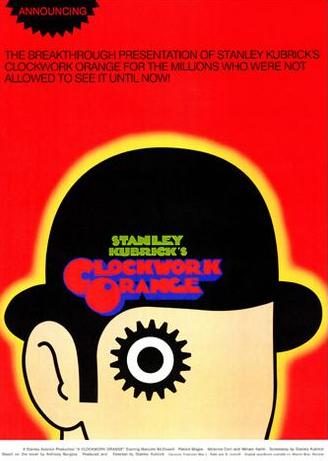
Project Clockwork Oren
Sy to YU and Oomoo:
have a project for the exhibition 2006. it's about time, space, distance, travel... pretty much what ive been interested to figure out about the idea of urban nomad, multiple identities/truths, dislocated residents, located immigrants... it's not merely a record of the phenomenon. it's going to be a creative project itself.
will work on it over winter or in 2 weeks time after my final submission. jan, probably need your help to assemble if i don't get to go back. im so excited, cant wait to do the drawings and show u guys.
this project is inspired by john hedjuk and peter eisenman (damn i still hate him but he makes sense).... hehehehe
Oomoo to Sy:
watched clockwork orange, found it extremely disturbing.
any connection with that?
i dont think einsenman makes sense, neither do i like his work! how in
the world is he connected to john hedjuk??
It is official! Oomoo has completed her Berkeley application online, and will be posting the rest of her documents tomorrow! Oomoo is flooded with relief, and is grateful for all who has been part of her application process, particularly to Sy, DT and RC who took the time to plough through her hideous/heinous essaays.
Oomoo will be putting in time to ReallyArchitecture this week, a short sabbatical before another round of applications besets.
Updates on other rar members:
KH is (Oomoo assumes) still not web savvy enough to post his comments on the blog! haha!
Hann is back (Oomoo hopes) from Myanmar (Oomoo can't verify this) in one piece. He is to work on the image of rar. New design for logo coming out soon!
JT is still busy with youths, which is of course a noble cause.
SY and YU both burning midnight oil at NY and CA respectively. Jia you to both. Submissions will be over soon, and you will hear more of them!
Saturday, December 10, 2005
Take care of your body Jan! the life of architecture will only get busier. the people i meet here in Sciarc are all crazy archi-maniacs... they are super xiao onz... i now will go into reluctant slumber every night... not that i want to cos of the crazy amount of submissions. just got email from Widodo about mAAN tokyo... 26-28oct 2006! let's all go!
My eyes are dry and my head heavy from a recent bout of flu. Am working on my university applications. Sometimes I wonder, is architecture really worth pursuing? My aunt thinks that I mistreat my body. I guess she is right. I sleep too late. Maybe I should go to bed now...after I tidy up my essays!
oomoo
Tuesday, November 01, 2005
hi guys! long time no hear from you all liao. keeping the [RAr] spirit strong? was chatting with Sylyng a few days ago. maybe we can contribute some of the works we do here and our thoughts. and when we come back next year or when we graduate, we can do a mini-presentation in NUS or even library to show perspectives of a differnt kind. what you guys think?
any news on the website, radio show, exhibition 2006 yet? keep the mails coming k?
Sernhong
Subscribe to:
Posts (Atom)